| Thin, single cracks, less than 1/4" wide | Hairline / shrinkage cracks | Normal aging and UV; asphalt shrinks as it oxidizes | Crack filling, then sealcoat | Low. Handle at next sealcoat. |
|---|
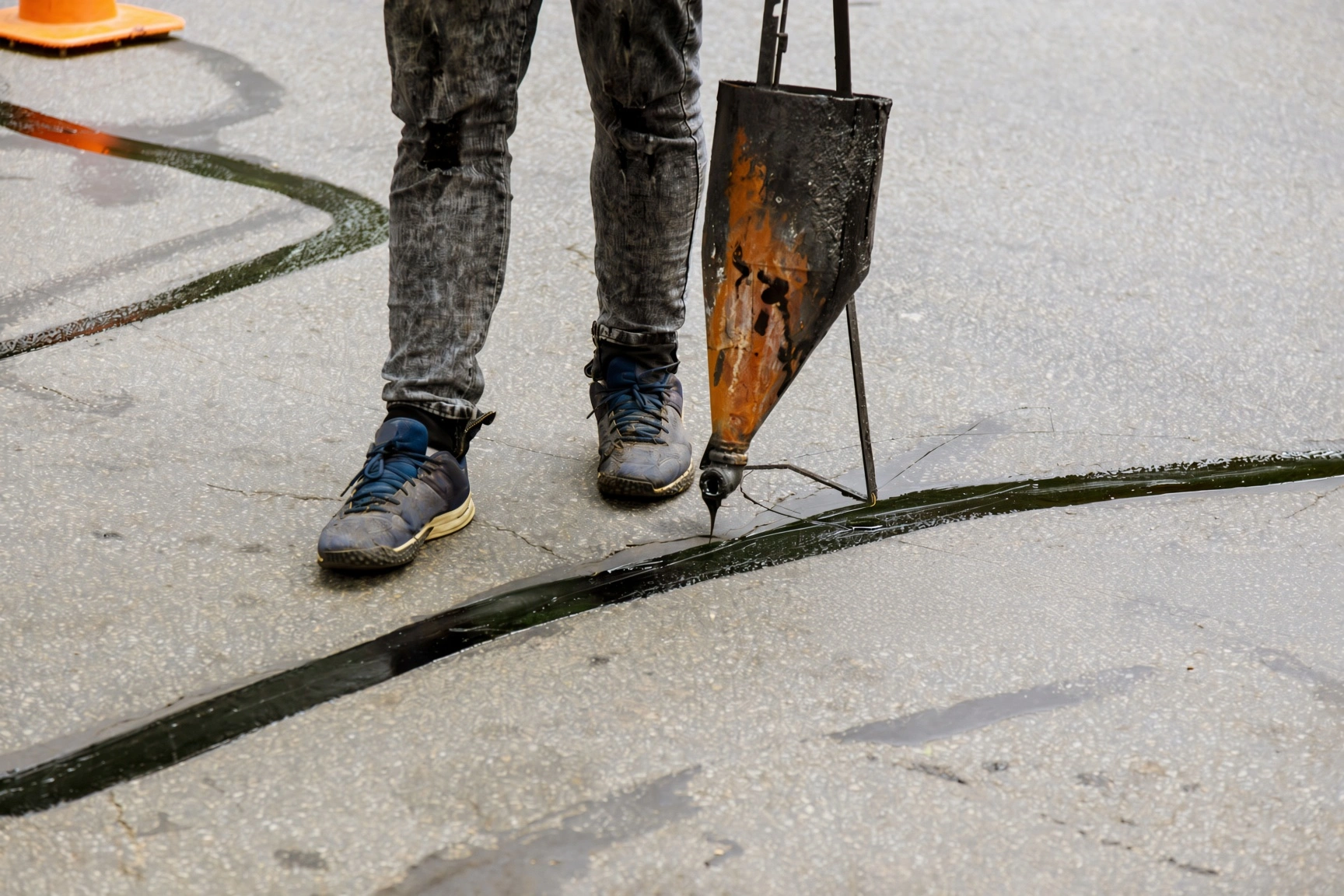
| Long crack running the length of the driveway | Longitudinal crack | Poor joint between two paving passes, or the base settling along one side | Hot crack sealing; patch if it's dropped on one side | Moderate. Seal before winter. |
|---|
| Crack running straight across the width | Transverse crack | Temperature swings; asphalt contracts on cold nights and cracks across | Hot crack sealing | Moderate. Seal before winter. |
|---|
| Cracks forming large squares or rectangles | Block cracking | Asphalt that has aged and hardened; common on driveways 15+ years old that were never sealed | Crack sealing if blocks are large; resurfacing if it covers the driveway | Moderate. |
|---|
| Cracks within a foot or two of the edge | Edge cracking | No shoulder support; water along the edge; mower and tire loads | Edge rebuild with stone support | Moderate. Spreads inward. |
|---|
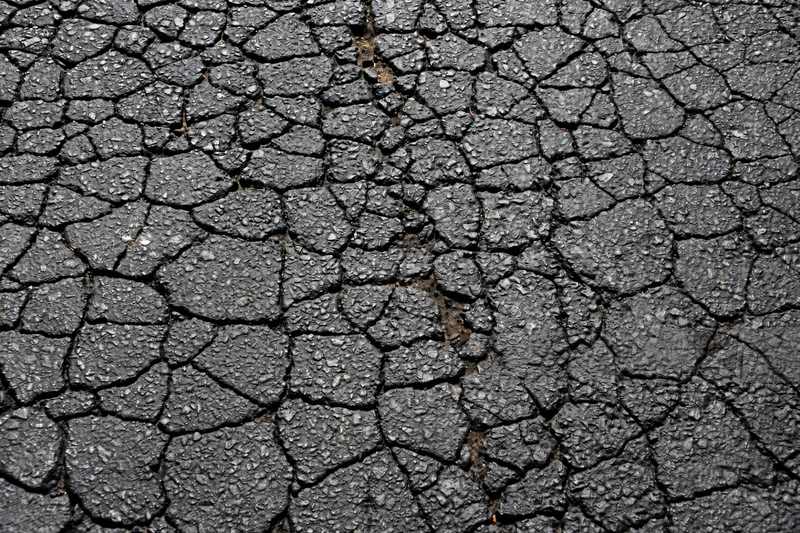
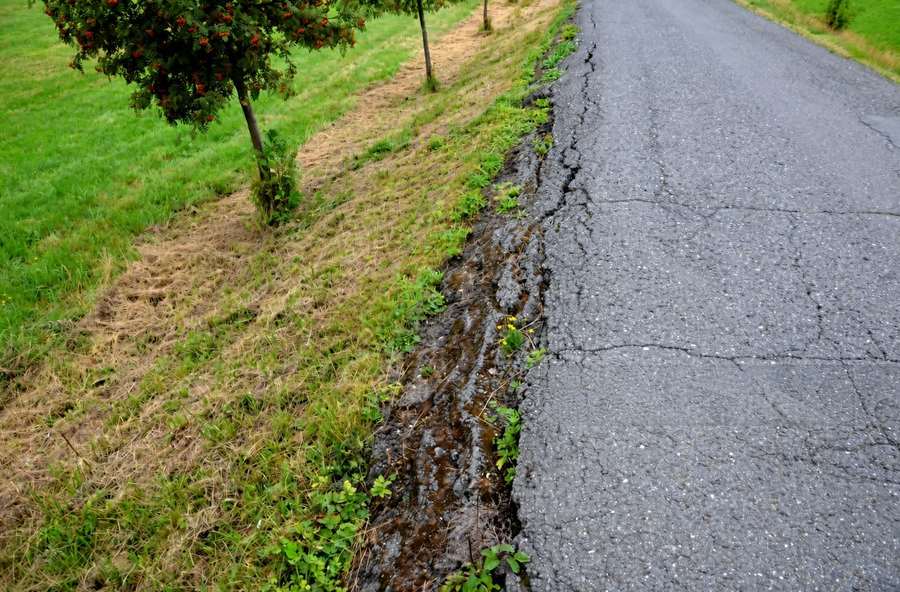
| Interconnected cracks like reptile skin | Alligator (fatigue) cracking | Wet, weak base; pavement flexing under load until it fatigues | Full-depth patch. Nothing else holds. | High. Becomes potholes. |
|---|
| Cracks that reappear in the same lines after an overlay | Reflective cracking | Old cracks under a new layer that weren't repaired before paving | Seal them; full-depth repair if they're alligatoring | Moderate. |
|---|
| Crescent-shaped cracks, often near a turn or stop | Slippage cracks | New asphalt didn't bond to the layer below (no tack coat); tires push it sideways | Remove and replace the slipped area with tack coat | Moderate to high. |
|---|
| Surface getting rough, loose stones coming off | Raveling | Binder aged out (no sealcoat), or asphalt placed too cold and never compacted | Sealcoat if early; skin patch or resurface if advanced | Low to moderate. |
|---|
| A hole with broken edges | Pothole | Water in the base plus freeze-thaw; the final stage of an unsealed crack | Full-depth hot mix patch | High. Grows with every rain. |
|---|
| Grooves worn in the wheel paths | Rutting | Base or asphalt too thin for the loads, or asphalt too soft; common in commercial drive lanes | Mill and repave the lane; rebuild base if deep | Moderate. Holds water. |
|---|
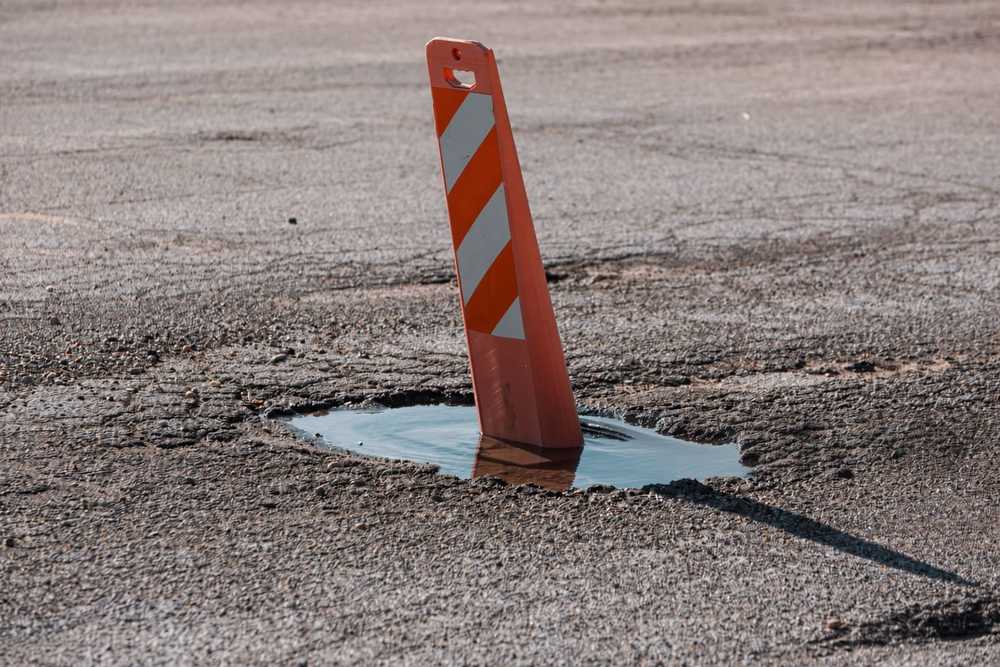
| Low spot that puddles after rain | Depression / birdbath | Settled trench or fill, or base fines washed out by water | Relevel; full-depth if the void is deep | High before winter. Puddles become potholes. |
|---|
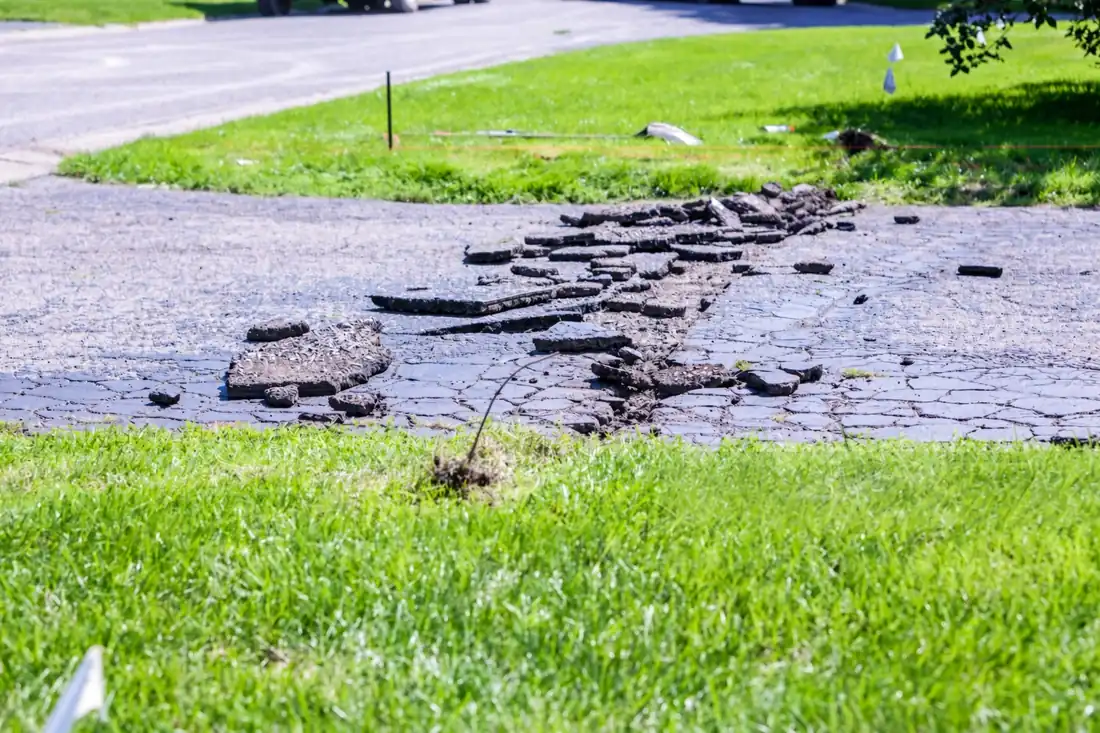
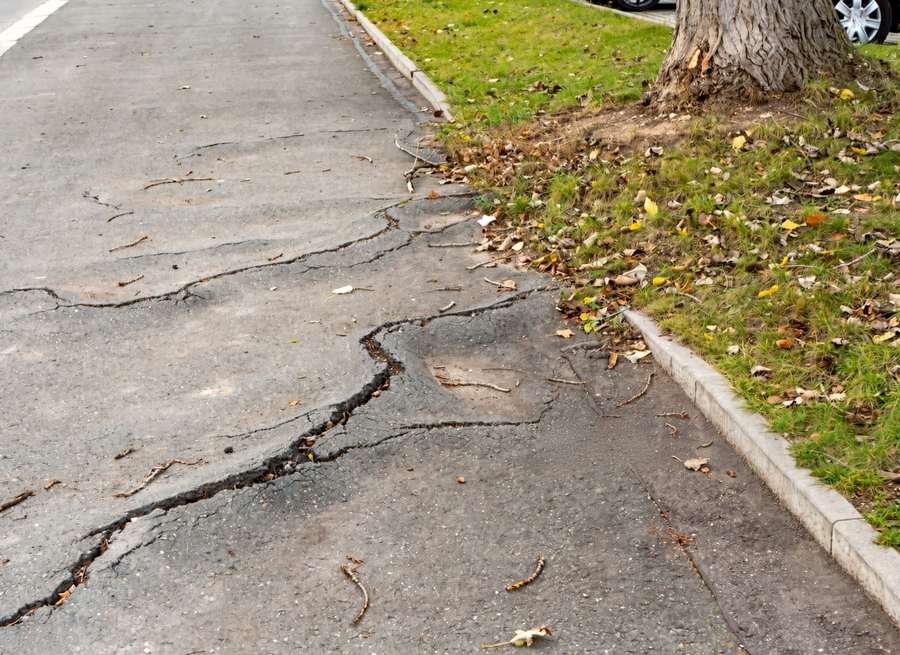
| Pavement pushed up in a ridge or hump | Upheaval / heave | Tree roots, or clay swelling with water; occasionally frost | Root repair or full-depth patch with drainage | Moderate. Trip hazard. |
|---|
| Wavy, bunched-up asphalt near a stop point | Shoving / corrugation | Heavy braking or turning on asphalt that's too soft or not bonded; dumpster pads, drive-thrus | Remove and replace with stiffer mix and proper base | Moderate. |
|---|
| Faded gray, dry, dull surface | Oxidation | UV exposure without sealcoating | Sealcoating | Low, but it's the start of everything above. |
|---|
| Soft, dark, sticky spot that dents | Oil / fuel damage | Drips from a parked vehicle dissolving the binder | Cut out and patch; prime stains before sealing | Moderate. Spreads slowly. |
|---|
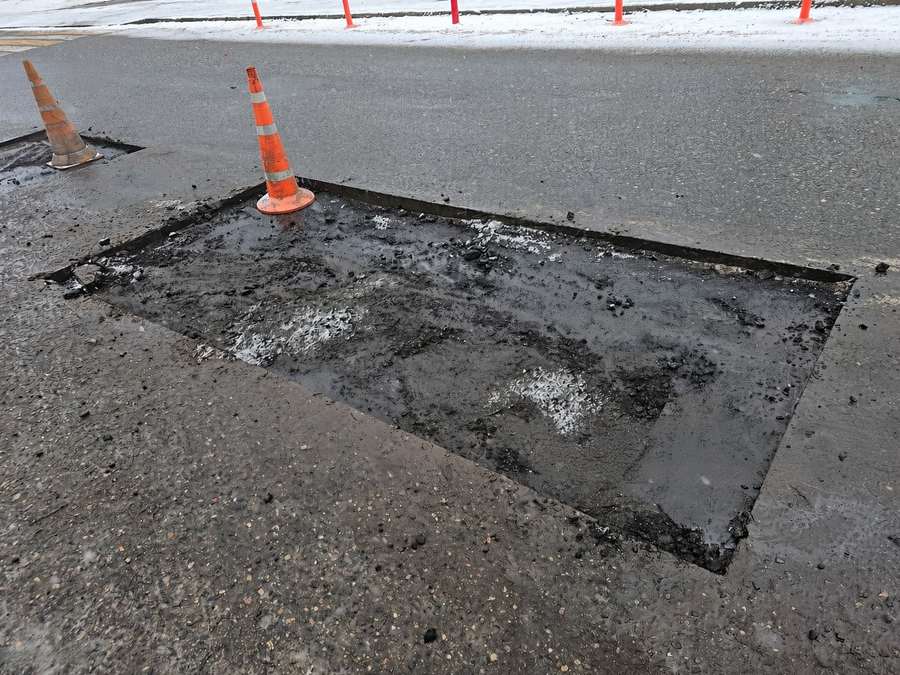
| Patch that has sunk or popped out | Failed patch | Cold patch, no base repair, or no saw-cut and tack | Remove and redo full-depth | Moderate to high. |
|---|